ReplyDude: an AI agent that runs reply-based growth around the clock

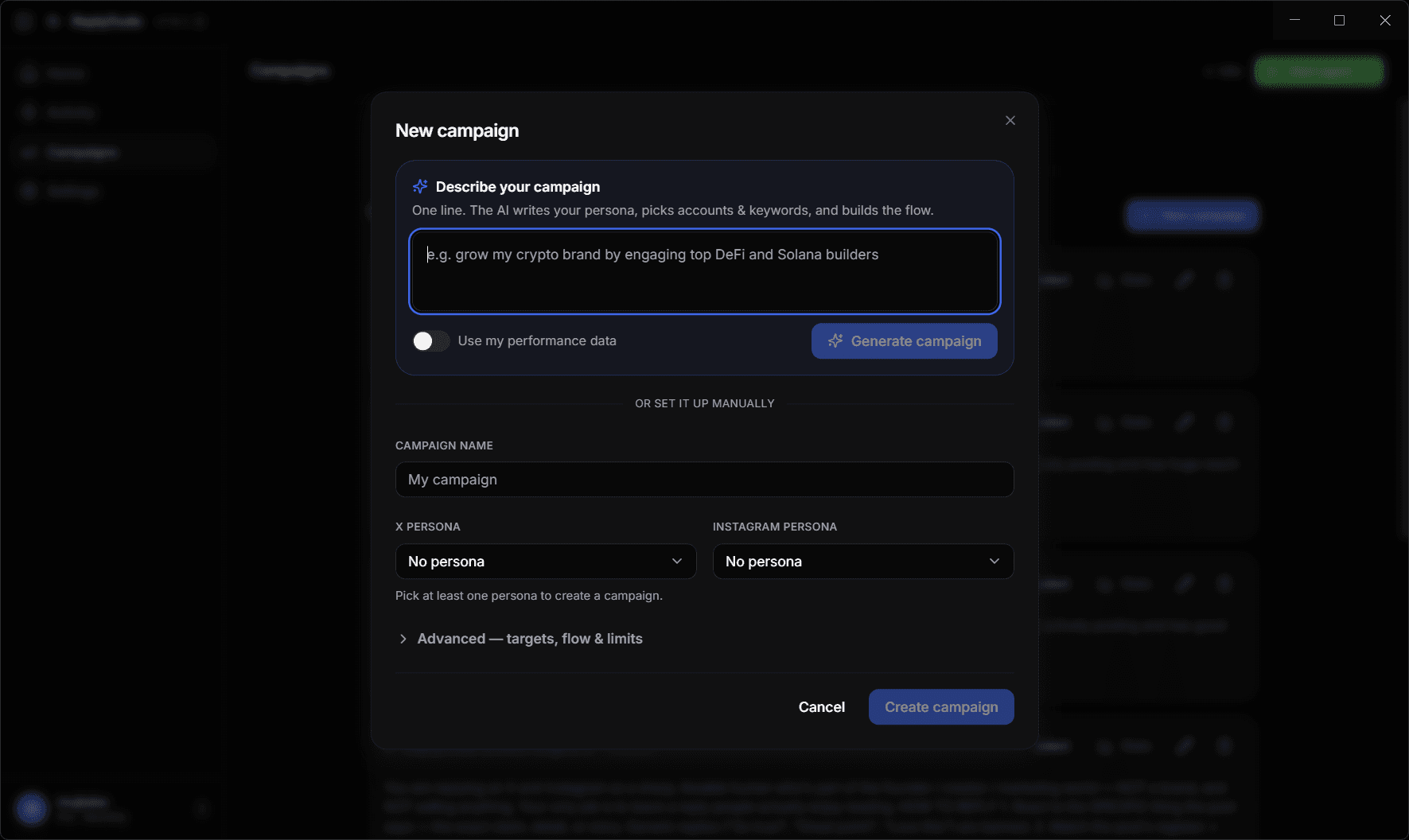
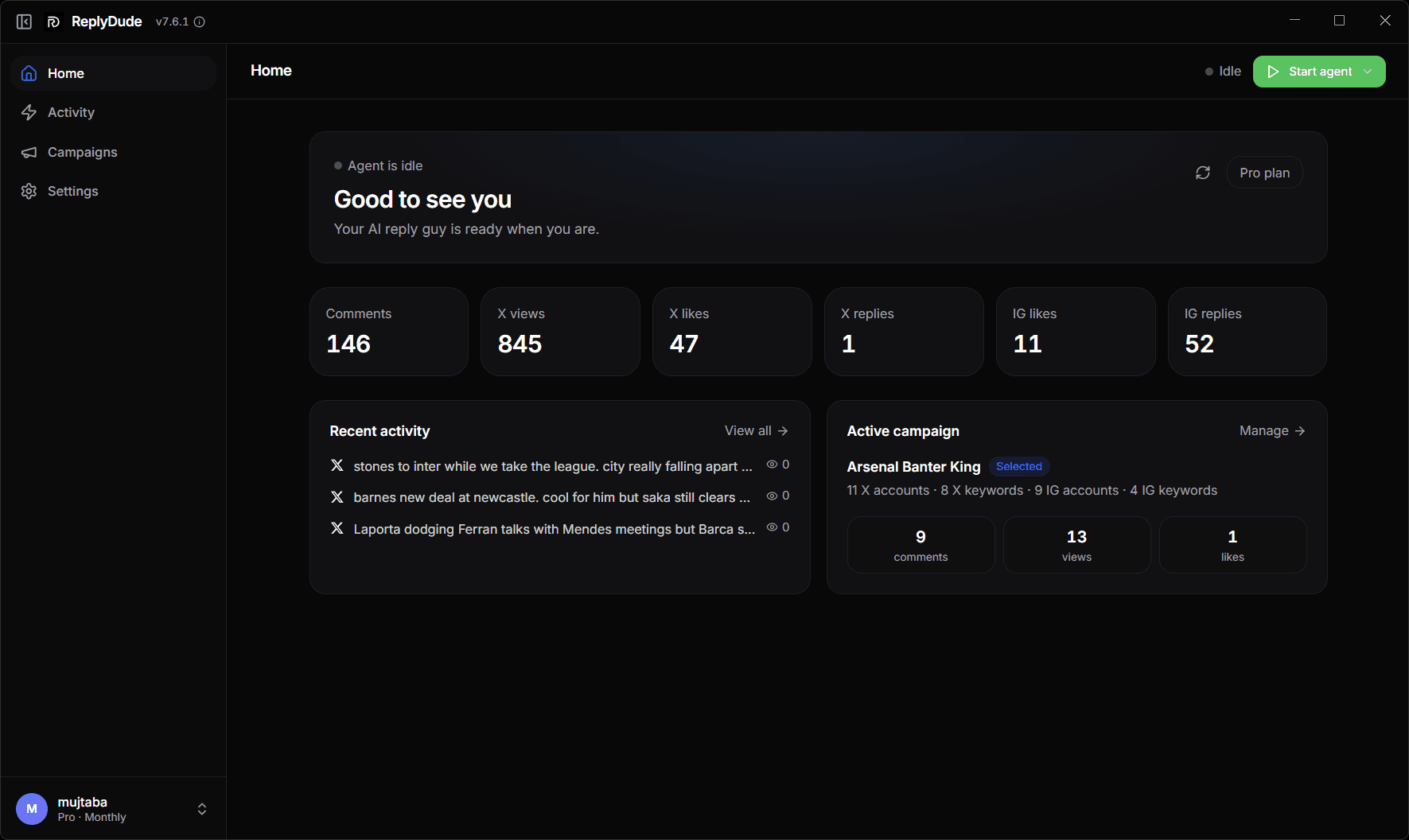
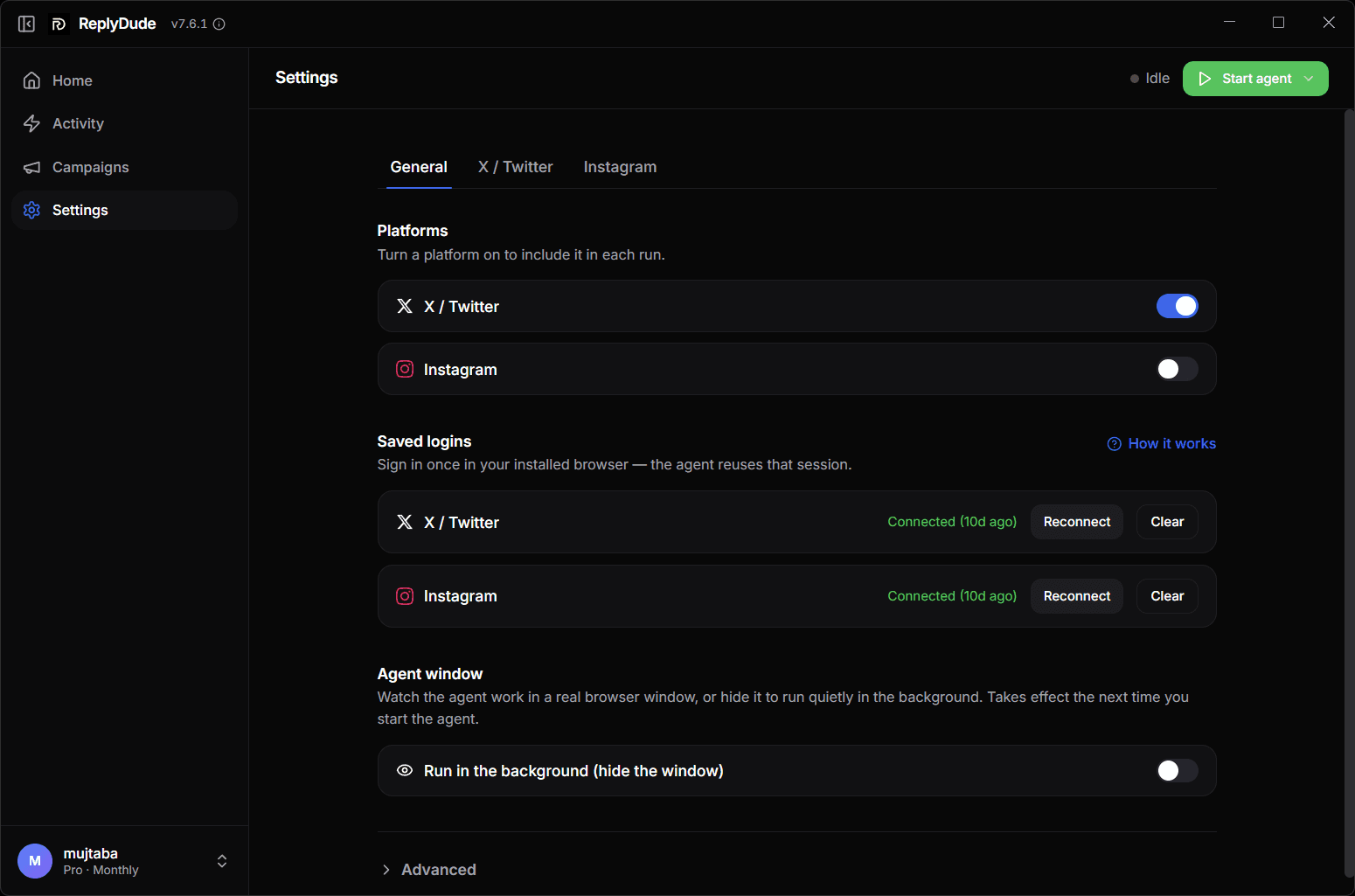
replydude.ai, the shipped product, live today
What is ReplyDude?
A cross-platform desktop agent that watches the accounts you choose, drafts replies in your voice, and posts within about ninety seconds of a tracked post, pacing itself like a person rather than a script. Codroon built it and co-founded the company behind it.
The bet
Replying is the most reliable organic growth strategy left on X and Instagram, and almost nobody does it consistently. It works because it puts you in front of an audience that already exists. But it demands you show up within minutes of the right post, several times a day, in a voice that sounds like you rather than like a tool.
Every existing attempt to automate it took the same shortcut: platform APIs or injected cookies. Both are brittle, both get accounts flagged, and both mean somebody is holding your credentials. The bet behind ReplyDude was that the hard version, done properly, would make the thing people actually wanted possible: drive the user's own signed-in browser, behave like a person, never touch a password.
Three decisions that shaped it
The interesting part of a build is rarely the feature list. These are the three calls that determined what ReplyDude could become.
Automation without credentials
ReplyDude drives the user's own installed browser (Chrome, Edge, or Opera GX) over the Chrome DevTools Protocol. It types character by character, scrolls and pauses at randomised intervals, keeps session rhythms and cooldowns, and enforces per-account caps.
It is meaningfully harder to build than calling an API, and it's the reason the product works. There are no platform API keys to be revoked, no cookies to inject, and no credentials leaving the user's machine.
- Character-by-character typing with human-like cadence
- Randomised dwell, scroll, and session timing
- Per-account caps and cooldowns to protect account health
- No credential storage, anywhere in the system
One abstraction, the right engine per task
Most products that advertise multiple models are offering the same task to different providers. ReplyDude assigns work by what each model is genuinely best at: Claude builds the campaign, Grok writes the replies, Gemini reads the images and video, and OpenAI runs as the alternate engine.
They sit behind a single abstraction, so swapping a provider is a config change rather than a rewrite. That matters in a market where model pricing and capability move every few months.
- Claude: campaign construction, persona writing, account research
- Grok: reply generation, tuned for platform-native voice
- Gemini: multimodal understanding of images and video in tracked posts
- OpenAI: alternate engine, and the fallback when a provider degrades
Non-custodial billing, signature-based auth
Plan checkout runs through a custom Solana Anchor program taking USDT or SOL, verified server-side, with no auto-renew and nothing custodial. Sign-in can be a pure wallet signature; the backend verifies ed25519 for Solana and EVM signatures via ethers, so there is no password in the system to breach.
Unusual for a SaaS product, and deliberate. It suited an audience that already holds wallets, and it removed an entire category of security surface.
- Custom on-chain Anchor program for plan checkout
- USDT and SOL, verified server-side, non-custodial
- Wallet-signature sign-in (ed25519 and EVM)
- No stored cards, no auto-renew, no password database
How the agent actually works
A campaign starts as one sentence. From there the agent researches target accounts against live trends, builds 300-plus-word personas for each platform, and verifies every handle in a real browser before it commits to anything.
Then it runs. It watches tracked accounts, drafts a reply in the user's voice, and posts within roughly ninety seconds, then re-measures that reply's engagement at one hour, one day, and seven days. Over 10,000 replies have gone out this way.
The part we're most pleased with is the loop that closes: the agent reads its own engagement data, proposes changes to targeting and voice, and waits for the user to approve them. It isn't a tool that runs a strategy you wrote once. It's one that argues with you about the strategy, using evidence.
Where it is now
ReplyDude is live at v7.6.1: seven tagged releases in four months, shipped through tag-triggered CI on self-hosted infrastructure, with multi-OS Electron builds and auto-updates. Windows and Linux are out; macOS is in progress.
Over a thousand people use it, across roughly three thousand connected accounts. It's a live product with an active roadmap rather than a finished one, which is the honest description of any software still being used.
What building it taught us
Three things we now bring to client work because ReplyDude forced us to learn them.
Agents that act, not agents that answer
Most “AI agent” work stops at generating text. ReplyDude had to take real actions in systems it didn't control, safely, thousands of times a day. Permissions, pacing, caps, and rollback stopped being theoretical.
AI Agent DevelopmentRouting work to the right model
Running four providers in production taught us where each one is genuinely better, and how much you save by not sending every task to the frontier model. It's the first thing we look at on any AI build now.
Generative AI DevelopmentShipping desktop software properly
Auto-updates, multi-OS builds, and release discipline are unglamorous and they're what separates a demo from a product people keep open all day.
SaaS Development
ReplyDude in numbers
- 1,000+users
- 7releases in 4 months
- 4AI models, each with a job
- 3desktop platforms
Try it, or build something like it
ReplyDude is live and you can use it today. If you're building something that needs an agent to take real actions in real systems, that's the work we do.